

The Experience
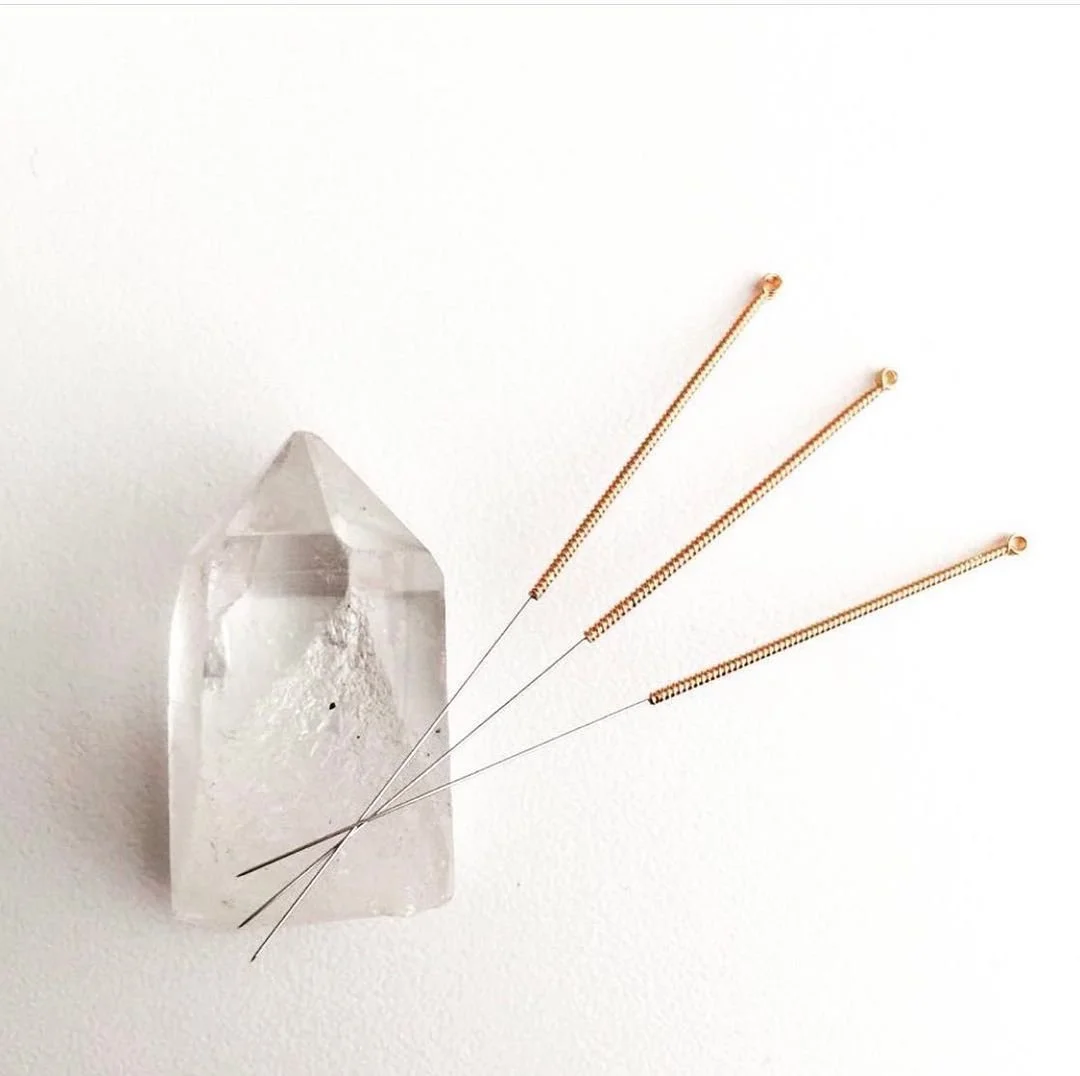
Acupuncture
Acupuncture is the practice of placing hair-thin, sterile needles at specific points on the body to shift how you're functioning — how you sleep, digest, cycle, and carry stress. I use a gentle technique and if anything, you’re likely to feel a heaviness, a warmth, a sudden drop into rest.
I treat fertility, hormones, and cycle health most often, though the medicine reaches much further than that: pain and tension, digestion, headaches, anxiety, sleep, immunity, the fatigue that doesn't lift. Whatever brings you in, we start with a real conversation — your history, your patterns, what your body has been doing and when it started. Once the needles are placed, you rest and many of my patients fall asleep.
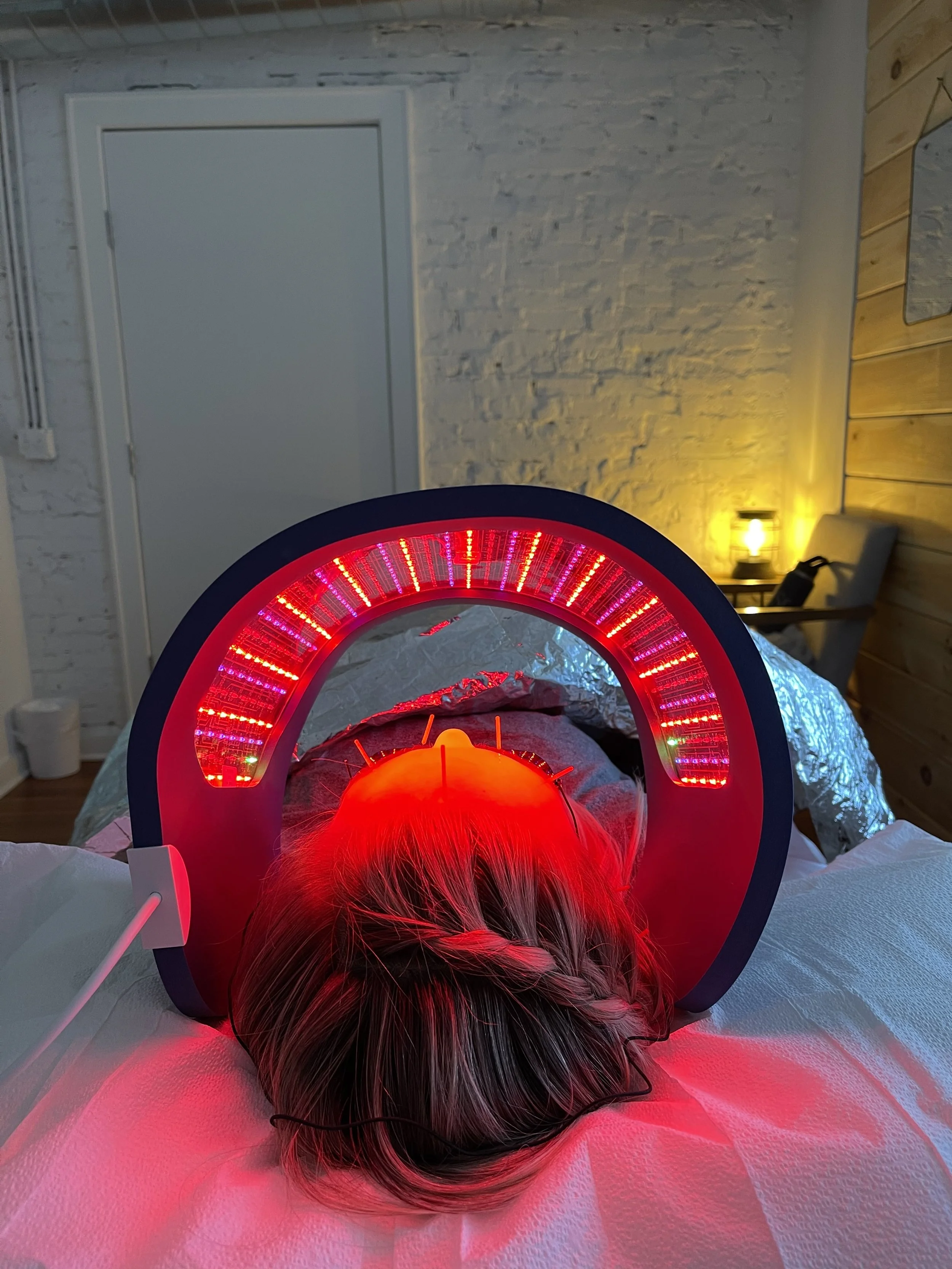
Celluma LED Light Therapy
Celluma is a flexible panel of low-level light that drapes gently over the face or body, bathing your skin in warm red and near-infrared wavelengths. There's no heat, no UV, and nothing to feel except a soft glow behind your closed eyes.
The idea is simple: certain wavelengths of light are absorbed by your cells and used as fuel. Red light supports collagen production and calms redness and irritation. Near-infrared travels deeper, easing inflammation and encouraging circulation in sore muscles and joints. Blue light targets the bacteria involved in breakouts.
Celluma is included in every cosmetic acupuncture session, where it works alongside the needles to support firmness, tone, and an evenness that builds over a series of treatments. It's also available by request during a regular acupuncture session — many people ask for it when they're working through pain, inflammation, or a stubborn flare of something on the skin. Just mention it when you book, or tell me when you arrive.
Most people fall asleep under it. That's allowed.
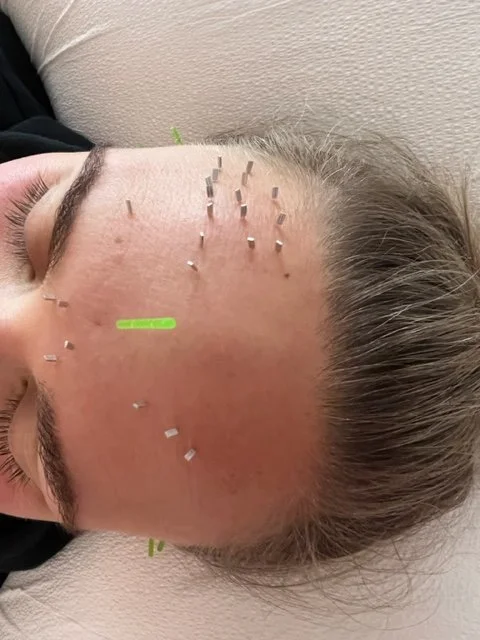
Cosmetic acupuncture
Very fine needles are placed in the face — along the jaw, the brow, the delicate areas around the eyes and mouth — creating tiny, controlled points of stimulation that prompt your skin to do what it already knows how to do: build collagen, circulate, repair. There's no filler, nothing injected, nothing foreign. Just your own tissue, encouraged. Over time, people notice softer fine lines, a firmer jaw and brow, a more even tone, and a kind of brightness that's hard to name but easy to see. Puffiness settles. Skin looks more like itself.
Every session also includes body points, because the face rarely tells the whole story. Sleep, digestion, hormones, and stress all live in your skin, and treating the whole picture is what makes the results hold. Each treatment finishes under the Celluma LED panel, whose red and near-infrared light supports collagen production and calms redness while you rest.
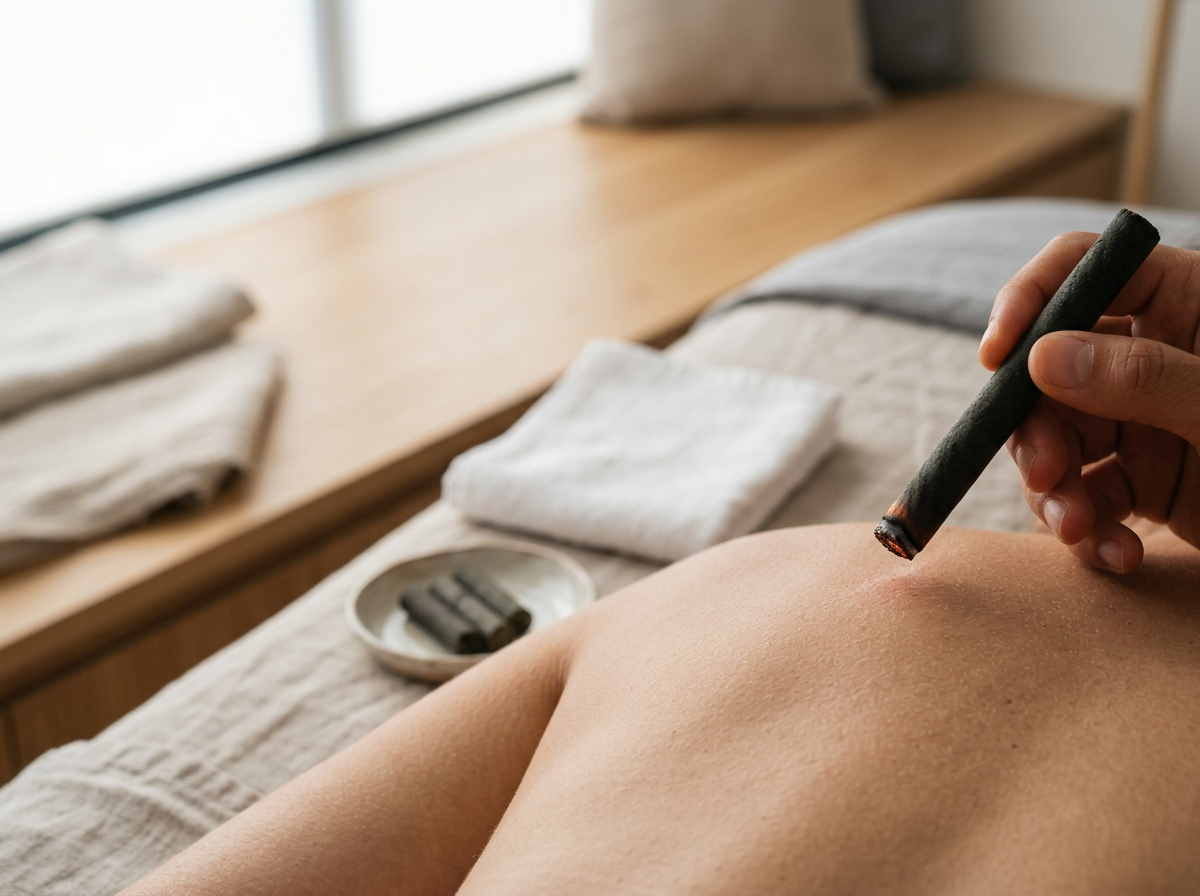
Moxibustion
Moxibustion — or moxa, as we call it — is one of the oldest and gentlest tools in Chinese medicine. It's the slow warming of specific points on the body using mugwort, a soft, dried herb with a distinctive, grounding aroma. Nothing touches the skin. The heat simply hovers, sinking in the way sun warms you through a window.
In Chinese medicine, cold and stagnation are considered obstacles to flow — to circulation, to digestion, to the steady rhythms that make the body feel like itself. Moxa invites warmth back in. It's especially supportive for fertility, menstrual discomfort, digestive sluggishness, and the kind of deep, achy tension that gets worse in cold or damp weather.
Most people describe it as deeply comforting. The warmth builds slowly, the room smells faintly herbal and earthy, and there's nothing to do but let it work. Moxa is often woven into an acupuncture session rather than booked on its own — I'll suggest it when your body seems to be asking for warmth.
Cupping
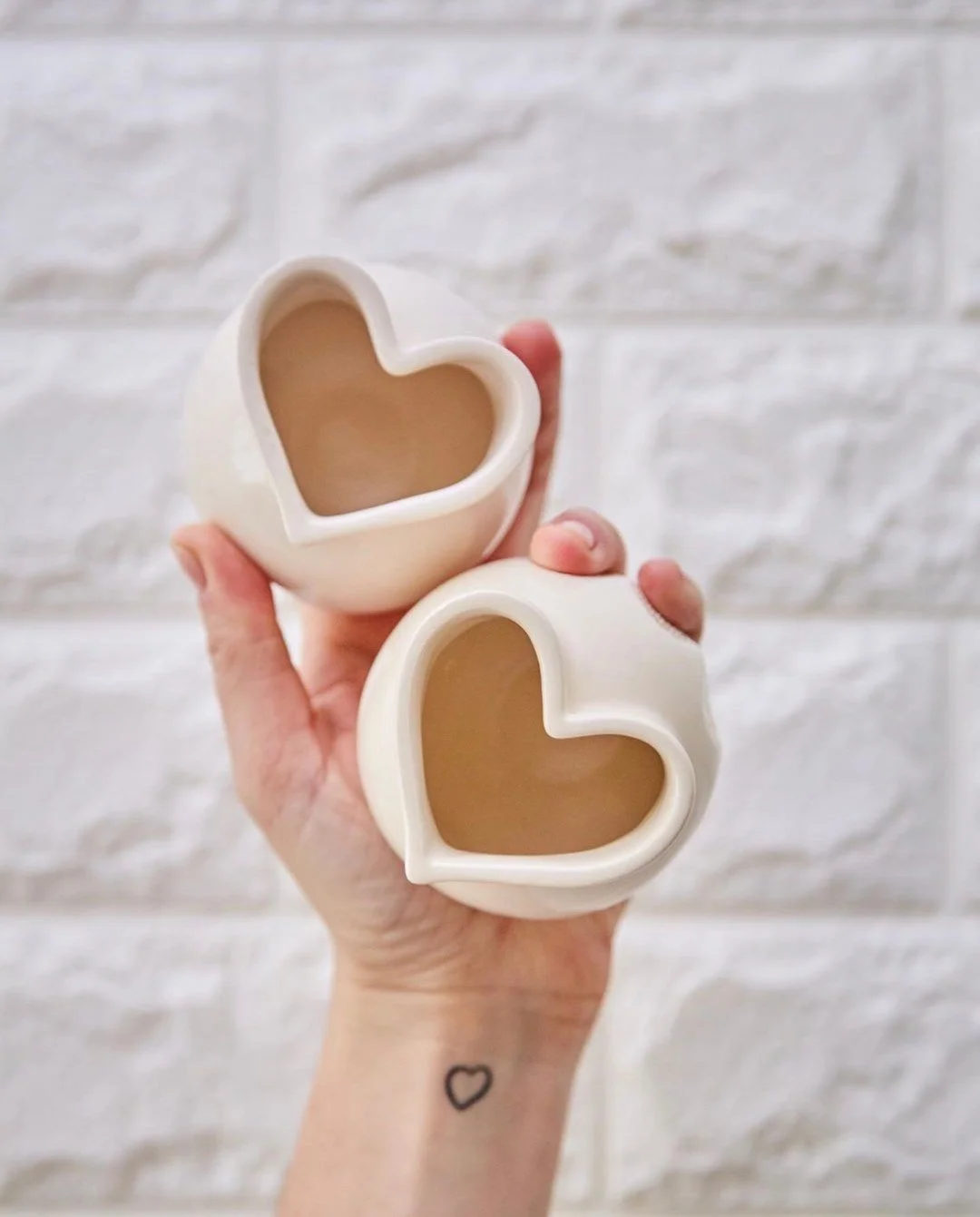
Cupping uses gentle suction to lift and separate the layers of tissue just beneath the skin. Glass or silicone cups are placed along the back, shoulders, or wherever the body is holding on, and left to rest for a few minutes — or glided slowly across oiled skin, which feels a bit like a deep massage in reverse.
Where massage presses down, cupping draws up. That lift creates space in tissue that's been compressed and stuck, encouraging fresh circulation into areas that have gone quiet and tight. It's wonderful for shoulders that live up by your ears, low backs that ache from sitting, tightness that lingers after a hard workout, and the heavy congestion that settles in your chest during a cold.
Trigger point acupuncture
Trigger points are the tight, ropey knots that form in overworked muscle — the ones you can press on and feel a familiar ache echo somewhere else entirely. A knot in your shoulder that sends pain up the side of your neck. A spot deep in the hip that lights up the back of your leg. Trigger point acupuncture treats those bands directly, placing a fine needle into the contracted tissue to prompt it to let go.
When a trigger point releases, the muscle often gives a quick, involuntary twitch and a noticeable easing to follow.
This works beautifully for stubborn neck and shoulder tension, low back pain, sciatic-type pain down the leg, jaw tightness, and old injuries that never fully resolved. It's also the approach and tool I reach for when pain is clearly mechanical and hasn't responded to gentler work.
Trigger point needling is usually woven into a regular acupuncture session rather than booked separately — we'll release what needs releasing, then let you rest with whole-body points to settle your nervous system and work on other concerns.
Your Questions, Answered
-
Physiologically, placing a fine needle at a specific point creates a small, deliberate signal — one your body responds to by increasing blood flow to the area, releasing endorphins and anti-inflammatory compounds, and shifting your nervous system out of fight-or-flight and into the rest-and-repair state where actual healing happens. Much of modern research points here: acupuncture regulates. It nudges systems that have drifted off course back toward their own baseline.
The second answer is older, and it's the one that drew me to this medicine. Chinese medicine describes a current of vital energy — qi — moving through channels in the body the way water moves through a landscape. When that current flows freely, you feel like yourself. When it pools, stalls, or runs dry, symptoms appear: pain, insomnia, irregular cycles, that low hum of anxiety you can't trace to anything. The points are places where the current comes close to the surface and can be gently redirected. We're not adding anything. We're removing what's in the way.
What surprises most people is what happens after the needles are in. Somewhere in that quiet hour, you drop below ordinary waking awareness into something closer to a meditative state — heavy, floating, dreamlike, the boundary between you and the room going soft. Some people call it the acupuncture nap. I think of it as the body finally getting a chance to hear itself. Whatever it is, that altered, deeply parasympathetic state is where much of the real work occurs, which is why I hold a full hour for every patient and never rush anyone out of the room.
-
I'll ask about the thing that brought you in, and then I'll keep going — sleep, digestion, temperature, appetite, energy through the day, your cycle, your stress, old injuries, what you crave, what wakes you at 3am. People are often surprised by the range of it. What does any of that have to do with why I'm here?
Everything, usually. In Chinese medicine, the body is read as one interconnected system, and symptoms that seem unrelated are often branches of the same root. That's the part I care most about — finding the thread that ties it together. Many of my patients have seen a number of providers before me, each treating one piece, and no one asking how the pieces fit. Making those connections is the work I'm proudest of.
Once we've talked, we treat. You'll settle onto a warm heated table with music playing, and I'll walk you gently through what I'm doing and why as I place each needle. Before I leave the room, I'll guide you into a short meditation to help you drop in.
Please wear loose comfortable clothing that can be rolled up to elbows and knees.
-
I have a small sole practioner practice and my hope is that you feel that consistent support in every session. I intentionally take on a limited amount of new patients as I’m focused on building a relationship with you. One where you walk in and I know your story, your goals, your preferences without having to look something up in your chart. m also treating you as a whole person, not a symptom. Acupuncture is the center of the work, but we'll collaborate on the rest of it too: lifestyle, nutrition, supplements, sleep, stress, mental well-being. I have a deep passion and understanding of womens health and a gentle technique a gentle technique refined over years of treating sensitive bodies and nervous systems that need coaxing, not forcing.
-
You can reach us anytime via our contact page or email info@intuitivewellnessacu.com or by texting 203-900-4033. As I’m often in session or running after two littles, emails or texts are the quickest ways to get in touch.
-
Acupuncture pricing includes any adjunct therapies I may recommend such as cupping, moxibustion, LED light etc.
Your first visit is $260/90 minutes and follow up appointments are $190/60 minutes.
Cosmetic acupuncture is $260 as it is a longer visit.
I am not in network with any insurance but am always happy to provide a super-bill for you to submit for possible reimbursement